Interaction pattern · 2024 · Nerdwallet
CardFinder
A guided credit card recommendation experience that helped users narrow complex options with confidence while preserving NerdWallet's editorial trust.

Summary
Executive summary
Problem
Users struggled to confidently choose a credit card due to product complexity, perceived bias, and decision fatigue.
Approach
As Senior Product Designer, led UX strategy and end-to-end experience design for a guided quiz and explainable results flow in close partnership with Product, Engineering, Content, and Legal.
Outcome
Launched a scalable recommendation experience that reduced decision anxiety, increased qualified engagement with reviews, and preserved long-term trust.
Problem
Diagnosis
NerdWallet's credit card ecosystem relied heavily on editorial reviews and comparison pages, but many users still felt overwhelmed deciding where to start. CardFinder sat at the intersection of editorial trust, personalization, and affiliate monetization, making recommendation quality and transparency business-critical.
Problem
Readers needed a way to reduce decision paralysis, narrow options quickly, and move into high-intent editorial content without feeling sold to.
Business context
The experience needed to drive monetization without compromising credibility, a non-negotiable constraint for a trust-first financial brand.
Strategy
Rather than building an opaque best-card engine, we focused on guided clarity: help users decide confidently without pretending the product could decide for them.
Constraints
What was fixed
Trust vs. optimization
Recommendations could not feel biased or sales-driven. Over-optimizing for conversion risked long-term brand trust.
Explainability
Users needed to understand why cards were shown — opaque ranking would read as affiliate-driven, not editorial.
Editorial gating
Only fully reviewed, editorially approved cards were eligible. Sponsored relationships never overrode relevance.
Scale across categories
The solution had to work across many card categories and future products without one-off layout exceptions.
Specification
Entry point and quiz
CardFinder was designed as a guided recommendation flow, not a one-click decision tool. The first step kept the ask lightweight and goal-based so users could begin without sharing sensitive information.
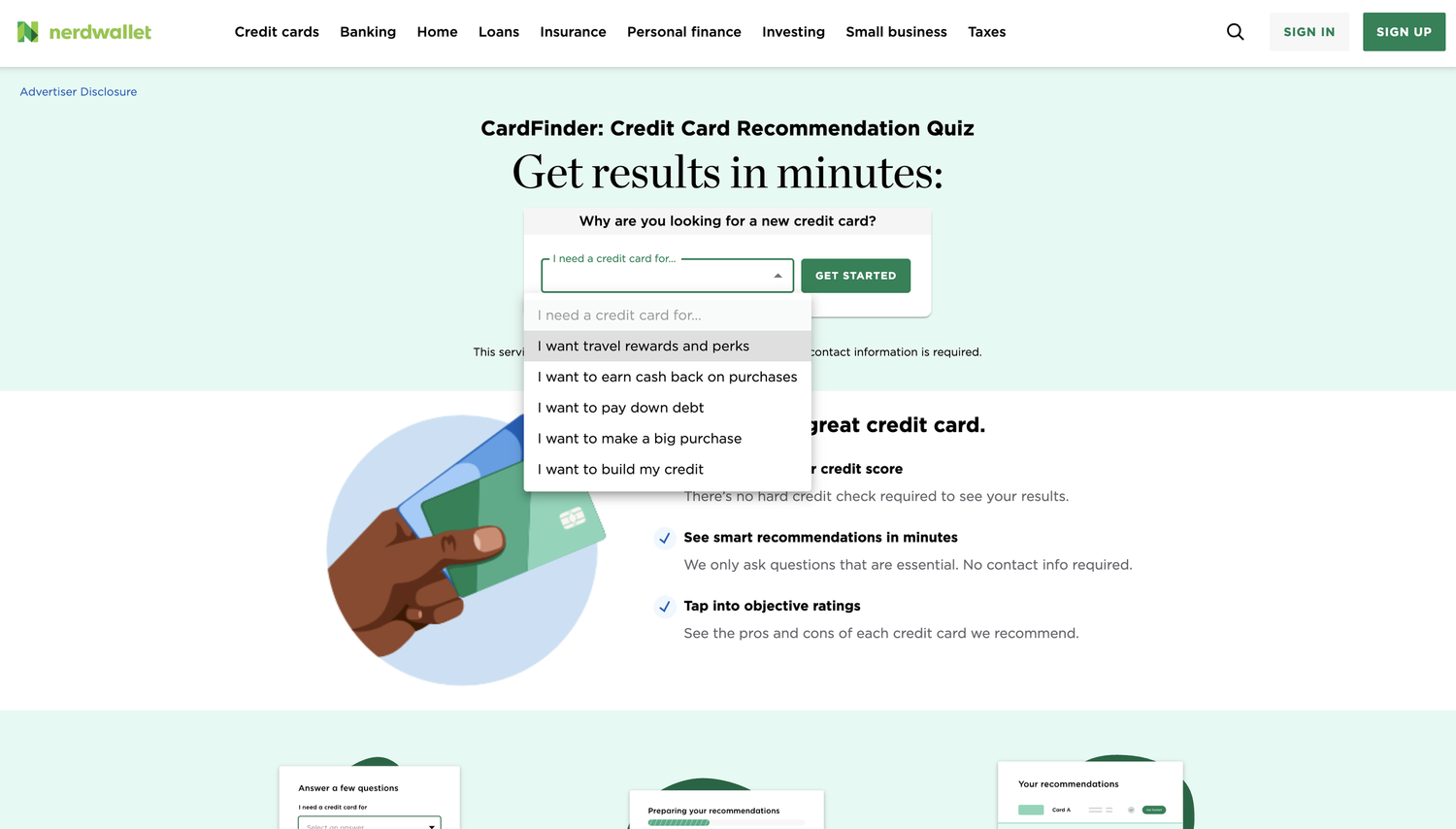
- Clear promise: get results in minutes
- Goal-first entry point before deeper preferences
- Trust cues emphasize no hard credit check and objective ratings
Principles
Design principles
01
Trust over persuasion
The goal was not to decide for users — but to help them decide confidently.
02
Progressive disclosure
Lightweight, goal-based questions first; optional depth for cautious users who wanted more context before committing.
03
Explainable recommendations
Every result needed a clear rationale tied to stated preferences — not a black-box 'best card' verdict.
Specification
Results as the trust moment
The results page was the primary trust moment. We intentionally showed a small set of strong options, explained why each card matched, and created direct paths into full editorial reviews.
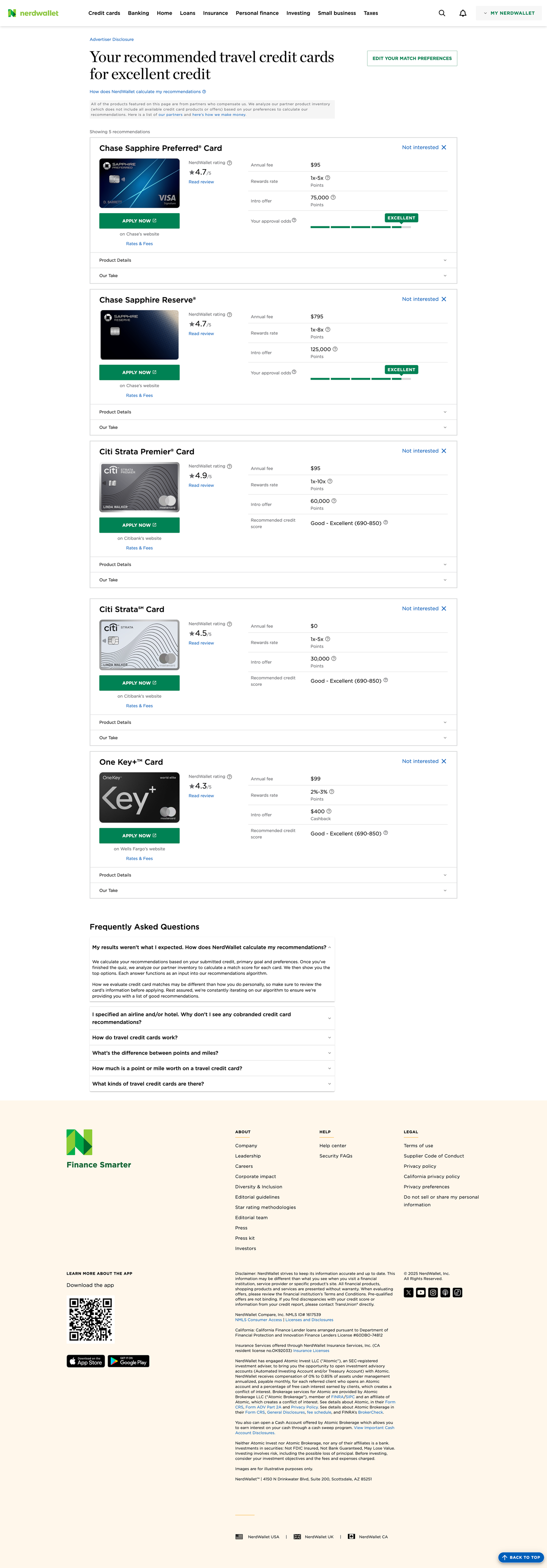
- User goal and credit profile remain visible in the result title
- Three to five recommended options instead of a single winner
- Key fees, rewards, offers, and approval odds scan together
- FAQ explains how recommendations are calculated
Screen demo
Outcome
What shipped
Post-launch iteration showed stronger engagement without compromising the editorial voice that makes NerdWallet credible.
- Quiz completion
- Higher
- Review depth
- Deeper
- Downstream conversion
- Improved
vs. prior discovery paths in the release window
Qualified engagement with editorial content from results
Despite fewer hard pushes and no urgency framing
Qualitative feedback reinforced trust: users felt the flow respected their judgment rather than pushing a single outcome. CardFinder became a foundational discovery entry point, not a campaign funnel.
Reflection
Looking back
In high-stakes financial decisions, great design doesn't remove uncertainty; it helps users navigate it with confidence. CardFinder succeeded by prioritizing respect, clarity, and trust over short-term optimization.
Available
Need something similar?
Best fit for platform UX, growth systems, internal tools, and teams that need a senior IC who can shape the problem and ship the details. I respond to most inbound within a day.