Product prototype · 2025 · Klaviyo
RCS Setup
A guided setup experience that replaced manual RCS Agent registration spreadsheets with a scalable, self-serve workflow inside Klaviyo Settings.
Summary
Executive summary
Problem
With RCS emerging as a new messaging channel, brands needed a clear way to register and configure an RCS Agent. The carrier-governed prerequisite was initially handled through spreadsheets with nearly 30 required inputs.
Approach
Designed the end-to-end setup experience as a guided Settings workflow, translating external carrier requirements, global compliance rules, and Klaviyo's SMS ecosystem into a coherent in-product path.
Outcome
Launched a productized RCS Agent setup experience that replaced manual beta processes, reduced operational overhead, and created a scalable foundation for RCS adoption.
Problem
Diagnosis
RCS Agent setup sat at the intersection of external carrier constraints, global compliance rules, and Klaviyo's existing SMS ecosystem. The work needed to make a required infrastructure task feel consistent, trustworthy, and easy to complete inside an established product surface.
Beta operations
Early access relied on spreadsheets that created high cognitive effort for customers and manual coordination across product, operations, and customer-facing teams.
Carrier requirements
Required fields, validation rules, and review expectations varied by market, increasing the risk of incomplete or inconsistent data during carrier review.
Platform strategy
RCS needed to feel as approachable as SMS despite being more technical, more regulated, and less familiar to both customers and internal teams.
Constraints
What was fixed
No existing product pattern
Klaviyo had no in-product precedent for RCS Agent configuration, so the workflow had to establish a durable mental model without feeling bolted on.
External carrier constraints
Carrier requirements varied by country and imposed strict validation rules that needed to be reflected directly in the UI.
Unfamiliar domain language
RCS terms like agent, sender, and verification were new to customers and internal teams, making in-context guidance essential.
Settings architecture fit
The experience needed to live naturally inside Settings as shared brand infrastructure, not as a campaign-level artifact.
Principles
Design principles
01
Progressive disclosure
Expose requirements in manageable steps instead of asking customers to parse the full complexity of RCS registration up front.
02
Contextual input guidance
Make required fields, formatting rules, and country-specific constraints clear at the moment customers need them.
03
System-aware validation
Tie error states to real carrier requirements so customers can resolve issues before submission instead of after review failure.
Specification
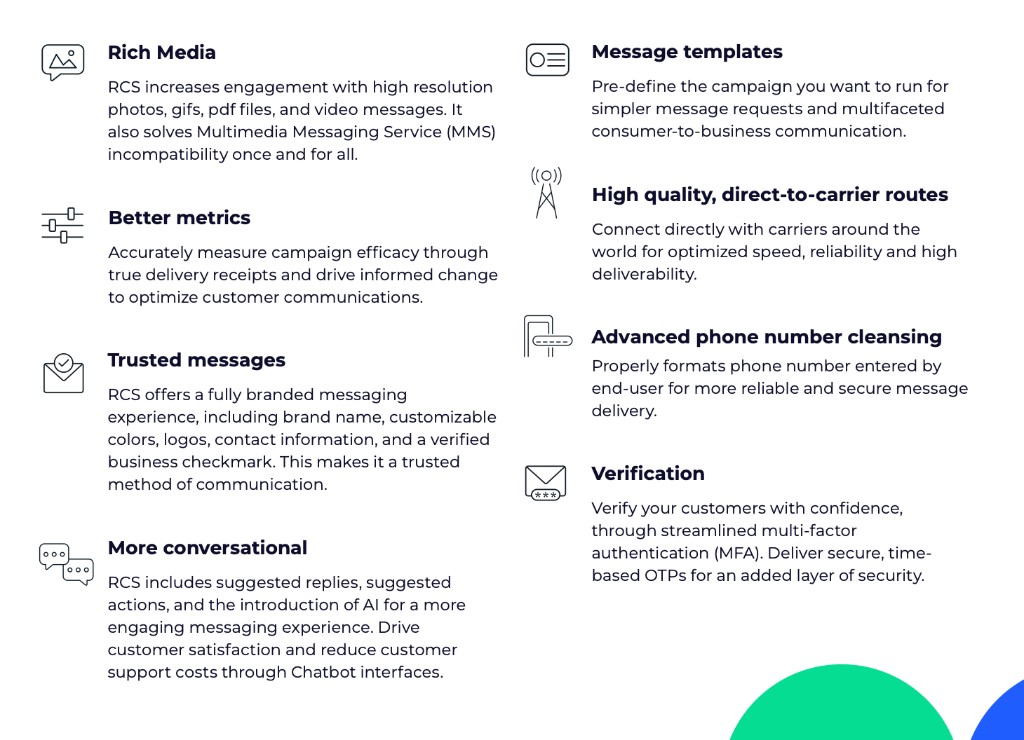
What RCS unlocks
Before designing the setup flow, we aligned on why RCS mattered for brands: richer messages, verified identity, and a more trusted customer experience than traditional SMS.
Specification
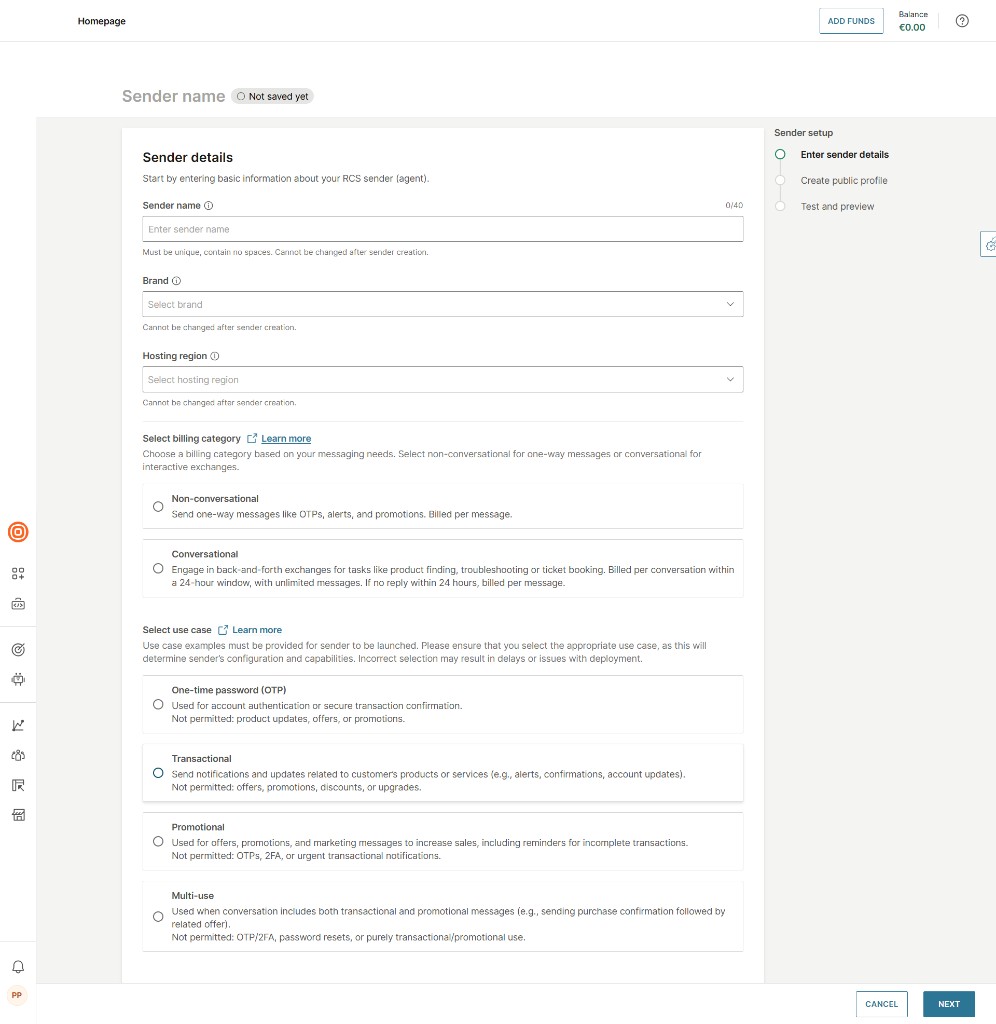
The incumbent pattern
The manual and third-party patterns we reviewed made the underlying system visible: long forms, carrier-specific categories, and little help understanding which details mattered.
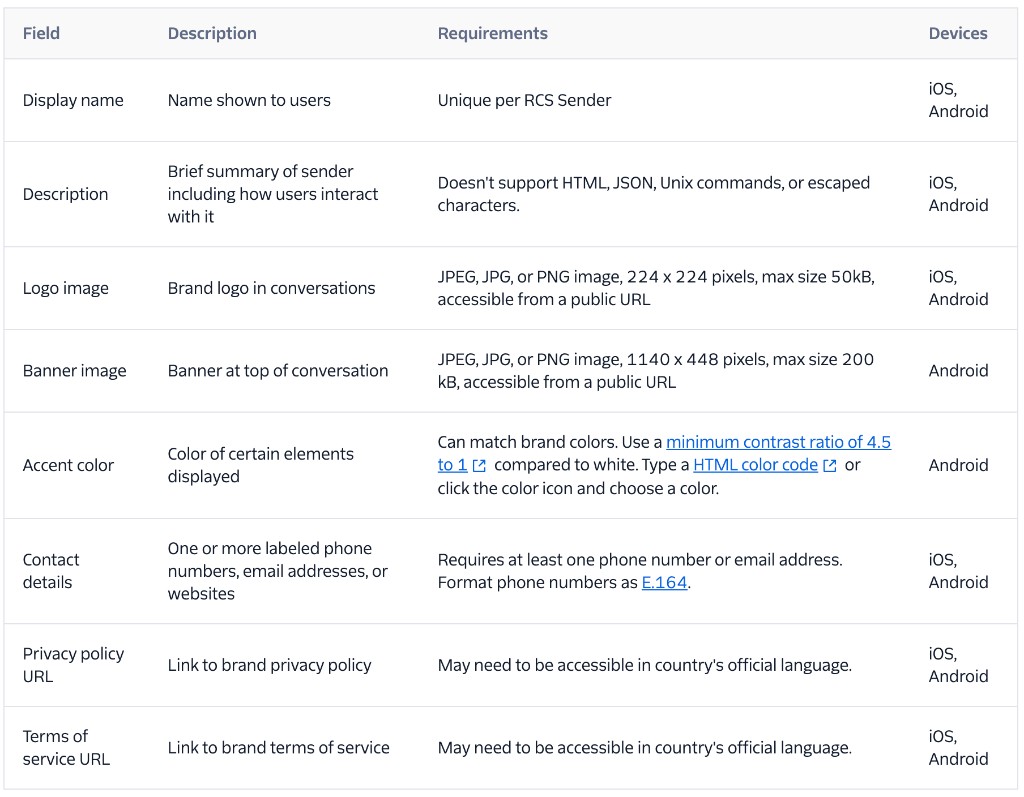
Specification
Carrier field requirements
The original spreadsheet-like requirement set contained nearly 30 inputs. Mapping those fields into groups by intent became the foundation for a guided workflow.
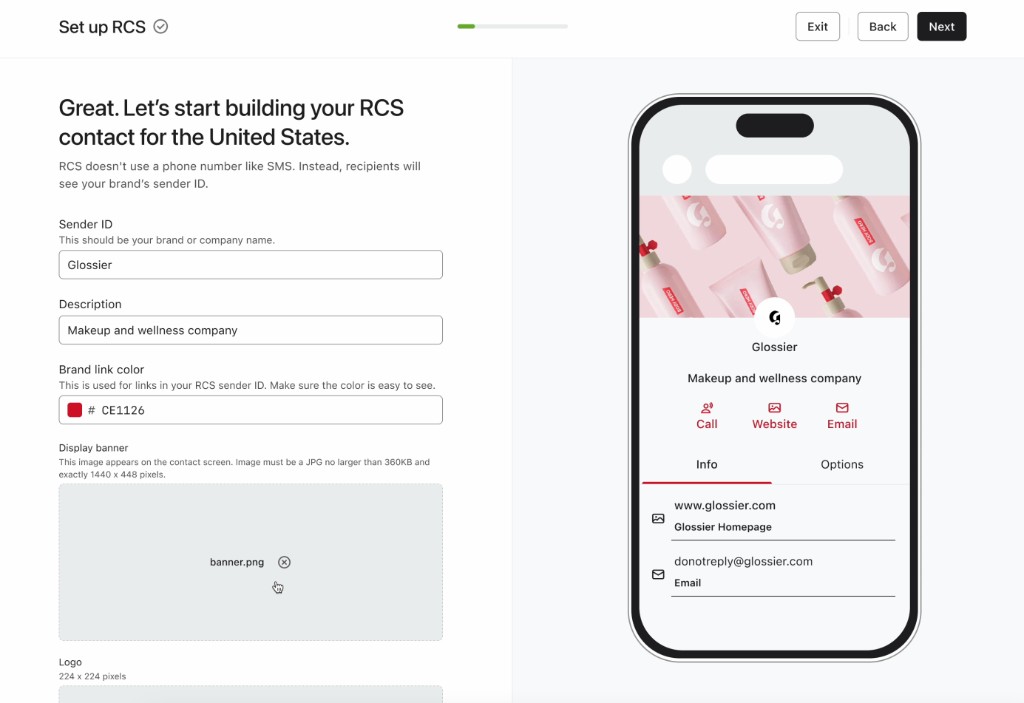
Recorded demo
Specification
Agent creation wizard
The designed experience converted the spreadsheet into a structured, multi-step wizard. Inputs were grouped by intent, with inline support for brand identity, contact details, compliance, and edge-case requirements.
Outcome
What shipped
The flow shipped as the productized setup path for RCS Agents inside Settings.
- Beta process
- Manual -> self-serve
- Required inputs
- ~30 fields
- Foundation
- Reusable pattern
Replaced spreadsheet-based coordination
Structured into a guided setup flow
Established a model for future messaging setup
The launched experience reduced setup friction for early RCS adopters, improved data consistency for downstream carrier approval, and reduced the operational burden of managing registration outside the product. Most importantly, it allowed RCS to launch as a productized feature rather than an operational exception.
Reflection
Looking back
This project reinforced a recurring theme in enterprise product design: the best experiences often come from absorbing complexity on behalf of the user. By translating opaque external requirements into a straightforward guided workflow, RCS Agent Setup helped a new messaging channel feel like a natural extension of Klaviyo's platform instead of a departure from it.
Available
Need something similar?
Best fit for platform UX, growth systems, internal tools, and teams that need a senior IC who can shape the problem and ship the details. I respond to most inbound within a day.