RCS Setup (2025)

Executive Summary
Problem:
With the introduction of RCS as a new messaging channel, brands lacked a clear, scalable way to register and configure an RCS Agent. This carrier-governed requirement was initially managed through manual spreadsheets.
Context:
RCS Agent setup sat at the intersection of external carrier constraints, global compliance rules, and Klaviyo’s existing SMS ecosystem. While foundational to branded RCS messaging, it needed to feel consistent, trustworthy, and easy to complete within an established product surface.
My Role:
Product Designer responsible for the end-to-end RCS Agent setup experience. I partnered closely with a Lead Designer, a Content Designer, a Product Manager, and the Engineering team to translate external requirements into a coherent, self-serve workflow within Settings.
Outcome:
Launched a guided RCS Agent setup experience that replaced manual beta processes, reduced operational overhead, and created a scalable foundation for RCS adoption.
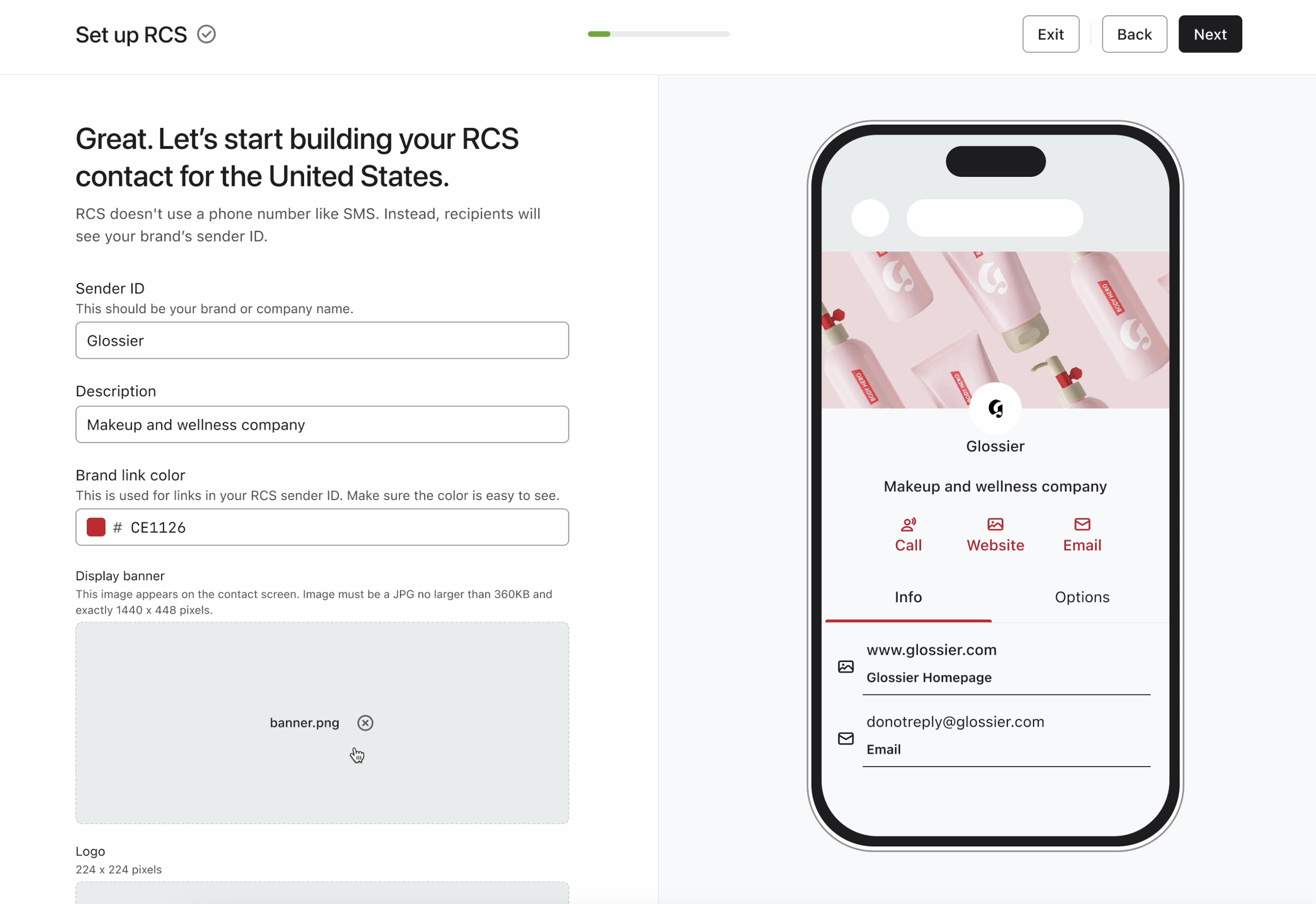
Problem & Business Context
When Klaviyo added RCS as a messaging type, early access was limited to a small beta cohort. Agent registration: a prerequisite for sending branded RCS messages, was handled via spreadsheets containing nearly 30 required inputs.
This approach introduced clear limitations:
High cognitive effort for customers
Manual coordination across teams
Risk of incomplete or inconsistent data during carrier review
From a business standpoint, RCS needed to feel as approachable as SMS, despite significantly higher technical and regulatory complexity.

Credit: Telesign - RCS Datasheet
Why This Was Hard
Several factors made this problem non-trivial:
No existing pattern: Klaviyo had no in-product precedent for RCS Agent configuration
External dependencies: Carrier requirements varied by country and imposed strict validation rules
Unfamiliar domain: RCS terminology and constraints were new to customers and internal teams alike
System fit: The experience needed to live naturally within an existing Settings architecture
Async collaboration: Core partners were distributed across time zones, requiring clear documentation and disciplined iteration
The challenge was not visual design; it was translating a complex, external system into an intuitive internal experience.
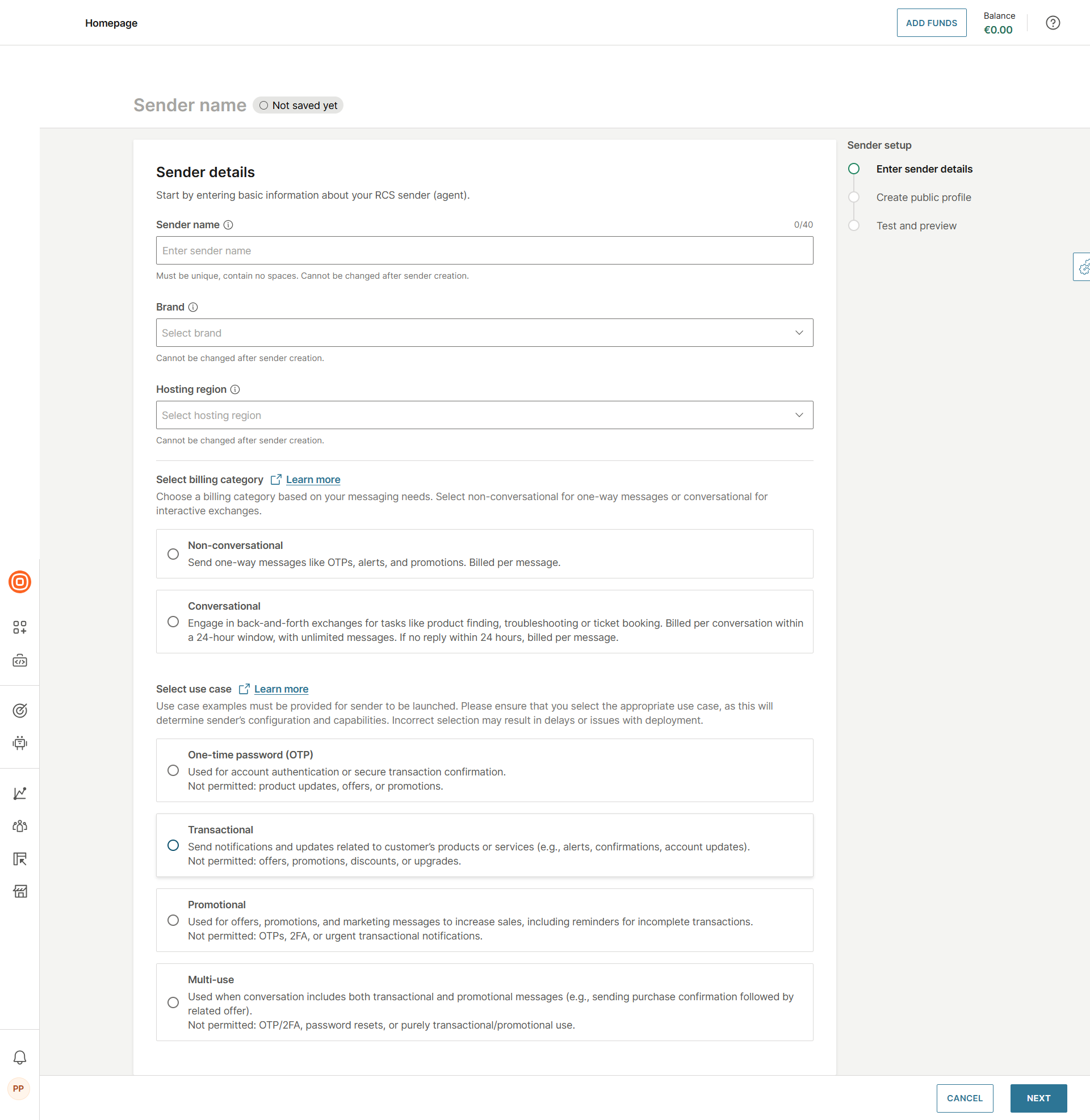
Credit: Infobip RCS sender creation
Approach & Strategy
Rather than exposing the full complexity of RCS, we framed Agent creation as a guided setup task with a clear start and finish.
Design principles:
Progressive disclosure over exhaustive explanation
Clear distinction between required and contextual inputs
System-aware validation with understandable feedback
A durable mental model: configure once, reuse everywhere
The goal was to help brands complete a necessary prerequisite with confidence—without requiring them to understand the underlying infrastructure.
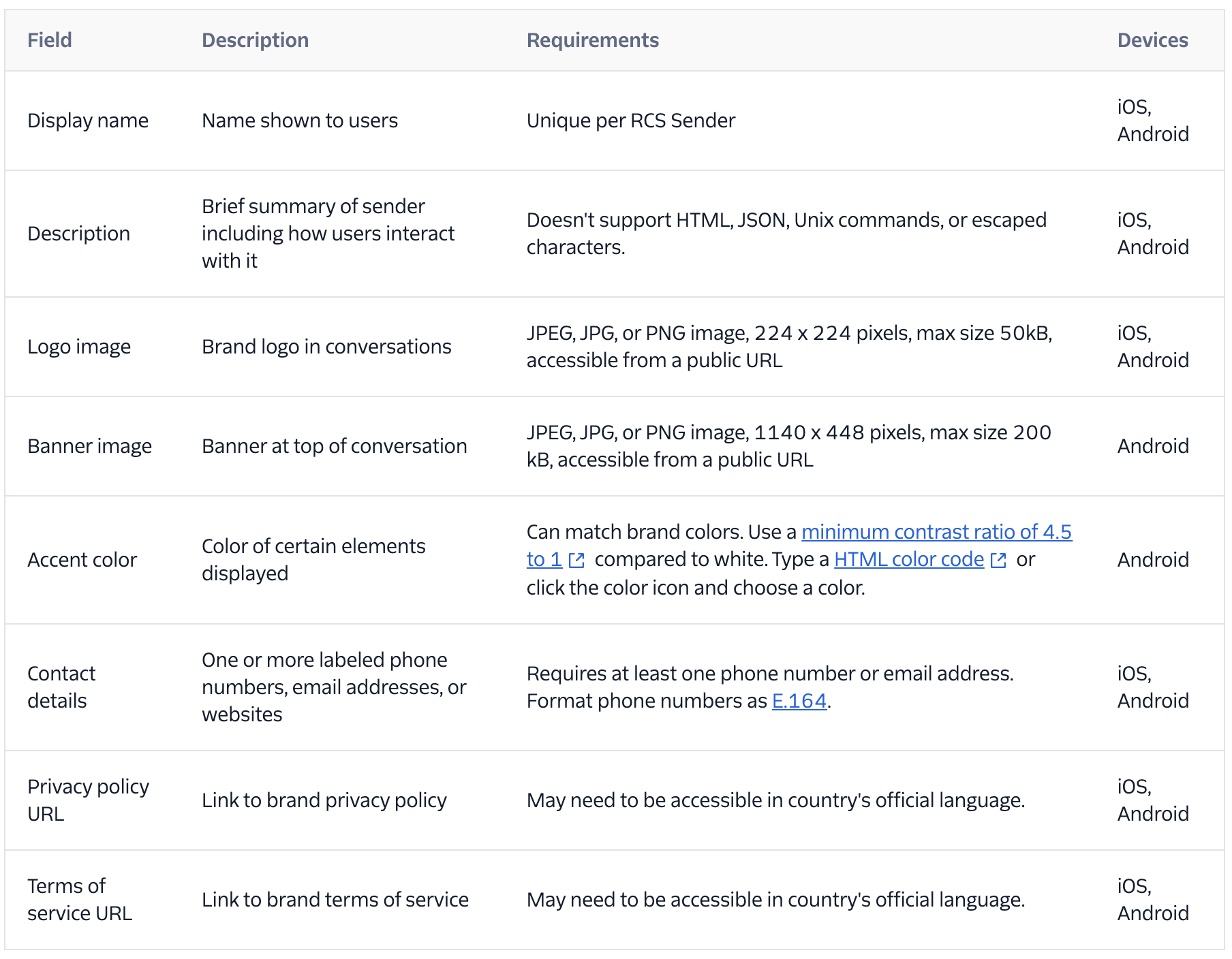
Credit: Twilio sender creation
Design Solution
Guided Setup Flow
Converted ~30 spreadsheet fields into a structured, multi-step wizard
Grouped inputs by intent (brand identity, contact details, compliance)
Embedded inline guidance in place of external documentation
Constraint-Aware UX
Country-specific character limits and formatting are handled directly in the UI
Clear error states tied to real carrier requirements
Progressive disclosure for advanced or edge-case scenarios
Native Settings Integration
Approved RCS Agents lived persistently in Settings
Messaging teams could design RCS templates elsewhere without re-entering agent data
Reinforced the Agent as shared brand infrastructure, not a campaign-level artifact
Impact & Outcomes
Replaced manual beta workflows with a scalable, self-serve experience
Reduced setup friction for early RCS adopters
Improved data consistency for downstream carrier approval
Established a reusable pattern for onboarding future messaging capabilities
Most importantly, it allowed RCS to launch as a productized feature, not an operational exception.
Reflection
This project reinforced a recurring theme in enterprise product design:
The best experiences often come from absorbing complexity on behalf of the user.
By translating opaque, external requirements into a straightforward, guided workflow, RCS Agent Setup enabled a new messaging channel to feel like a natural extension of Klaviyo’s platform—rather than a departure from it.
Thank you for reading. If you’d like to learn more about my design process, feel free to reach out at design@charronmatthews.com.
Thank you for reading. If you’d like to learn more about my design process, please feel free to contact me directly at design@charronmatthews.com — take care!